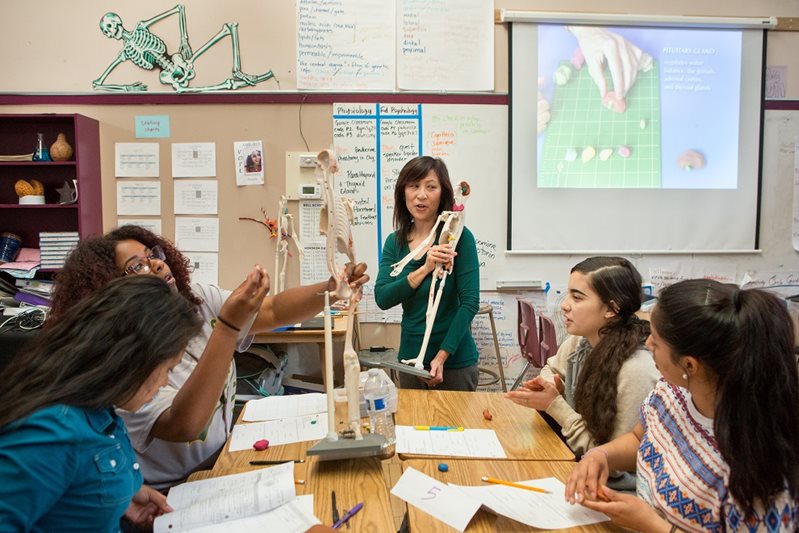
5 Exciting STEM Projects to Ignite Your Child's Curiosity
STEM education plays a crucial role in igniting a child's curiosity and fostering a love for learning. Engaging in hands-on projects can not only spark interest in science, technology, engineering, and mathematics, but also nurture creativity and critical thinking. Here are 5 exciting STEM projects that you can do with your child to cultivate their inquisitiveness:
- Rocket Launching: Create a simple water rocket using a plastic bottle, water, and a cork. This project teaches children basic physics concepts and allows them to experiment with different amounts of water and launch angles.
- Homemade Volcano: Mix baking soda and vinegar to create an explosive reaction that mimics a real volcano. This project can help children understand chemical reactions while having a blast!
- Circuit Building: Introduce your child to the basics of electricity by building simple circuits using batteries, wires, and bulbs. This project promotes problem-solving skills and a deeper understanding of electronic components.
- Plant Growth Experiment: Grow plants in different environments (light vs. dark) to study how they affect growth. This project can teach kids about biology and the scientific method.
- Basic Coding Games: Use free online platforms to introduce your child to coding. Creating simple games can enhance logical thinking and improve their technological skills.
How to Foster Creativity in STEM Learning: Tips and Techniques
Fostering creativity in STEM learning is essential for engaging students and enhancing their problem-solving skills. Creativity can be nurtured through various teaching techniques that encourage experimentation and critical thinking. One effective method is to incorporate project-based learning, where students can tackle real-world problems. This approach allows for hands-on experience and encourages students to think outside the box. Additionally, integrating collaborative activities, such as brainstorming sessions or team challenges, can help students to share ideas and build on each other’s creativity.
Another technique to promote creativity in STEM is to create a safe and encouraging learning environment. Teachers can implement mindfulness practices and foster open discussions that empower students to express their thoughts without fear of judgment. Providing opportunities for choice in projects or topics can also fuel student engagement and inspiration. Lastly, using technology and digital tools effectively can widen the creative landscapes for students, allowing them to explore various perspectives and unconventional solutions in their STEM endeavors.
Why STEM Education is Essential for the Innovators of Tomorrow
STEM education is crucial for cultivating the innovators of tomorrow, as it combines science, technology, engineering, and mathematics into a cohesive learning approach. This interdisciplinary framework fosters critical thinking, problem-solving, and creativity—skills that are essential in today’s rapidly changing world. By engaging students in hands-on projects and real-world applications, STEM education prepares them to tackle complex challenges and drive advancements in various fields. As innovation becomes increasingly important to economic growth, equipping future generations with these skills is imperative for ensuring a competitive workforce.
Moreover, STEM education plays a pivotal role in bridging the gap between theory and practice. Through collaborative learning experiences, students not only gain foundational knowledge but also develop the necessary soft skills, such as teamwork and communication. As industries evolve and technology continues to advance, the demand for skilled professionals in STEM fields will only increase. By prioritizing STEM education, we can inspire a new wave of innovators who will lead the way in addressing global challenges and shaping a sustainable future.